
How to Protect Your Pool From a North Texas Freeze
Most properly functioning pool systems can handle a short North Texas freeze when freeze protection is working as designed. The risk of damage increases during extended subfreezing temperatures, power outages, failed circulation, low water levels, or improperly configured automation.
The equipment pad, exposed plumbing, pumps, filters, heaters, and connected features generally face greater freeze risk than the pool shell. However, every pool is different, and no universal checklist can replace the instructions for your specific equipment, plumbing layout, and manufacturer requirements.
Key Takeaways: To help protect your pool before and during the next cold front, keep these four points in mind:
- Confirm freeze protection is enabled and verify that the equipment and circuits you need protected are included.
- Maintain the recommended water level so the skimmer can keep drawing water and the pump does not lose prime.
- Keep water circulating through every vulnerable line, including spa and water-feature lines, and monitor your system from the control panel or app rather than going out in unsafe conditions.
- If power or circulation fails, turn off the pool equipment at the breakers and follow your manufacturer’s or pool professional’s shutdown and drainage instructions. Never drain the entire pool.
Protect Your North Texas Pool Before the Next Freeze
Get expert guidance on freeze protection, automation settings, equipment placement, and winter-ready pool design.
📋 Table of Contents
- What Pool Freeze Protection Actually Does
- What to Do Before a North Texas Freeze
- How to Protect Your Pool While the Power Is On
- What to Do if the Power or Pool Pump Fails?
- How to Check Your Pool After the Freeze
- Does Freeze Protection Differ by Pool Type?
- How to Design a Pool for North Texas Freezes
- FAQs
What Pool Freeze Protection Actually Does
Pool freeze protection is an automatic feature, built into pool controls or pumps, that helps reduce the risk of freeze damage during cold weather. It can automatically start selected equipment when outdoor temperatures drop, but it is not a guarantee against damage.
⚙️ How Automatic Freeze Protection Works
Most systems use an outdoor air-temperature sensor to monitor conditions. When the temperature reaches the system’s programmed threshold, the controller starts the pumps or circuits assigned to freeze protection.
The goal is to keep water circulating through selected plumbing and equipment, reducing the chance of water freezing inside exposed pipes, pumps, and filters. Some pool and spa systems alternate between operating modes so water moves through both plumbing systems during a freeze.
Keep in mind that waterfalls, sheer descents, deck jets, booster pumps, and other auxiliary equipment may need to be assigned separately. If they are left off the freeze protection list, they can freeze even while the main pump is running.
⚠️ What Freeze Protection Cannot Guarantee
Freeze protection has important limits, and relying on it alone can leave your equipment at risk.
- It depends on electrical power. If the power goes out, the system cannot run, and water left in the equipment can begin to freeze quickly.
- It depends on working sensors, controllers, and pumps.
- It only protects the equipment and circuits assigned to freeze protection.
- It cannot compensate for low water levels, a lost pump prime, or other problems that stop normal circulation.
- It may not prevent damage during prolonged extreme cold or equipment failures.
- Activation temperatures vary by manufacturer and system configuration, so there is no single setting that applies to every pool.
Think of freeze protection as one layer of defense. Before the first cold front, confirm that freeze protection is enabled, that the main pump actually starts, and that every circuit you want protected is assigned.
What to Do Before a North Texas Freeze
A little preparation before freezing weather can help reduce the risk of damage. Use this checklist before the next cold front arrives.
1. Verify That Freeze Protection Is Enabled
Check your pool’s control panel or mobile app to make sure freeze protection is turned on. Confirm which pumps and circuits are included, note the activation temperature if your system displays it, and make sure the main circulation pump actually starts when freeze protection is triggered. If your manual describes a freeze-mode test, use it.
If you are unsure how your system is configured, review the manufacturer’s manual or contact your pool builder or service technician.
2. Bring the Pool Water to Its Proper Operating Level
Maintain the recommended operating water level, generally about halfway up the skimmer opening, before freezing weather arrives.
Avoid lowering the water for a freeze unless your builder tells you to, since the skimmer needs water to keep circulation going. If the water is too low, the skimmer may draw air, causing the pump to lose prime and reducing normal circulation.
3. Clear Baskets and Confirm Unrestricted Circulation
Turn the pump off at the control panel before opening the pump lid. Remove leaves and debris from the skimmer baskets and pump basket, then close the lid securely and confirm the pump primes when you restart it.
Check that the filter pressure gauge reads in its normal range for your system, return jets have strong flow, and there are no signs that circulation is restricted. If pressure is high, clean or backwash the filter before the freeze.
4. Check Spas and Water Features Separately
Do not assume every water feature is included in freeze protection. Verify the operation of your spillover spa, waterfall, sheer descent, deck jets, separate feature pump, and any booster pump. Confirm each one is assigned to freeze protection or has its own freeze guard.
5. Locate Shutoffs, Breakers, and Drain Plugs Before the Freeze Arrives
Know where your equipment shutoffs, electrical breakers, and drain plugs are located before freezing conditions arrive. Familiarizing yourself with your equipment ahead of time is much safer than trying to identify components during icy or low-visibility conditions.
6. Save Your Equipment Manuals and Emergency Contacts
Keep these resources easy to access:
- Your pool builder’s freeze preparation instructions
- Automation system manual
- Pump, heater, and filter manuals
- Photos showing valve positions and drain plug locations
- Contact information for your local pool service professional
Is Your Pool Ready for Cold Weather?
Review your equipment, automation, plumbing, and freeze protection settings before temperatures drop.
How to Protect Your Pool While the Power Is On
When your pool has power during a freeze, the goal is to keep the system operating as designed. Proper circulation and working freeze protection settings can help reduce the chance of damage to vulnerable equipment and plumbing.
💧 Keep Water Circulating Through Vulnerable Lines
During freezing conditions, continuous circulation is commonly recommended because it helps reduce the chance of water sitting still inside exposed plumbing and equipment.
Continuous circulation reduces freeze risk, but it does not guarantee that plumbing or equipment cannot freeze during prolonged or severe conditions.
Make sure your pump is operating normally and that water is flowing through the protected circuits. If you have a variable speed pump, confirm its freeze protection speed is high enough to keep strong flow, following your manual.
If conditions outside are unsafe, check the control panel or app instead of going out to the equipment. If you notice unusual sounds, reduced flow, or an equipment error, call your pool professional, and see the next section if circulation stops.
🔥 Should You Run the Pool Heater During a Freeze?
Not as your freeze protection strategy. A pool heater is not a substitute for circulation or proper freeze protection.
Some systems include the heater in their freeze protection settings, so check your manual and follow the heater manufacturer’s instructions and your system’s recommended settings. Running the heater alone does not protect plumbing that is not circulating properly.
🧥 Should You Cover the Equipment?
Avoid covering pool equipment unless you know the method is approved for your specific system.
Improper covers or makeshift wrapping can trap heat, block motor airflow, or create a fire risk, especially around operating heaters, electrical components, and motors.
For the same reason, do not place patio heaters, space heaters, or heat lamps near pool equipment. Follow manufacturer guidance or ask a pool professional before adding any type of equipment cover.
🧊 What If the Pool Surface Freezes?
A thin layer of ice on the pool surface does not automatically mean that all plumbing or equipment is frozen.
Do not walk on the ice, strike it, or try to break it apart. Walking on ice can cause a fall or injury, and striking it can chip or crack the pool finish and tile.
If your equipment is running normally, continue monitoring circulation and watch for changes in pump operation, water flow, or equipment performance. From a safe position, check that ice is not collecting in the skimmer and restricting flow.
What to Do if the Power or Pool Pump Fails?
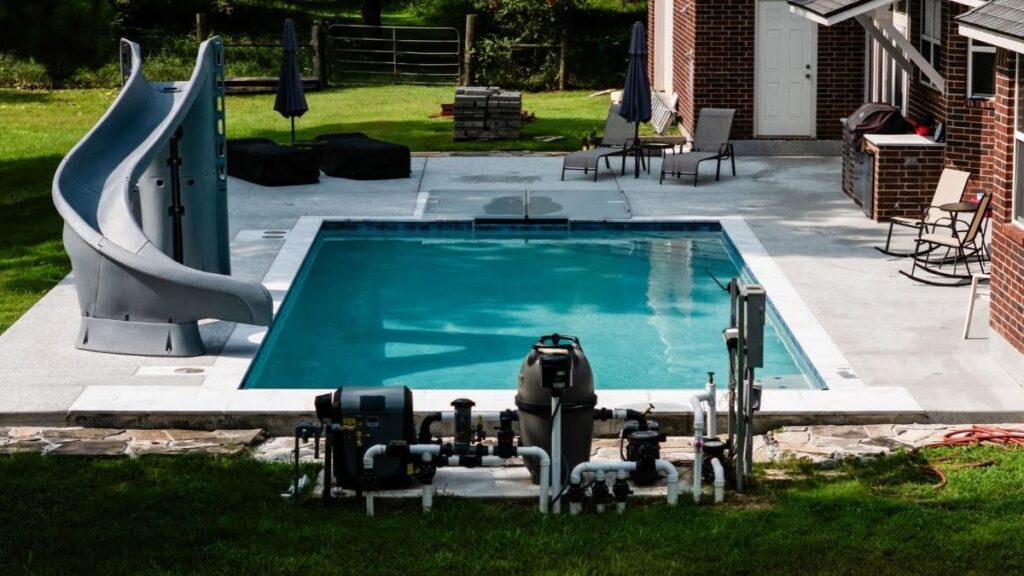
If power or circulation fails while temperatures are at or below freezing, switch off the pool equipment at the breakers so it cannot restart unexpectedly.
Follow your pool equipment manufacturer’s or builder’s instructions for relieving pressure and draining water from exposed equipment. Do not drain the entire swimming pool.
Why the Response Changes When Circulation Stops
Freeze protection depends on operating equipment and available power. When circulation stops, water trapped inside vulnerable components can freeze and expand, which may damage equipment or plumbing. In a hard freeze, water left standing in equipment can begin to freeze within hours.
Common areas at risk include:
- Pumps
- Filters
- Heaters
- Chlorinators and salt cells
- Exposed plumbing
- Valves and fittings
The right response depends on your specific pool setup. Equipment location, plumbing design, and manufacturer requirements can all affect the recommended steps.
Shut Off Power Before Touching Pool Equipment
If your pump stops during freezing weather, turn off the pool equipment at the breaker panel before inspecting or handling anything, even if the power is already out. This also keeps the pump from starting on its own when power returns while the water inside is still frozen.
Never touch pool electrical components while standing in water or on ice. If the breaker panel is outdoors or the path to it is icy, wait for safe conditions or call a pool or electrical professional. Your safety comes first, especially during storms or dangerous cold conditions.
Follow Your System-Specific Drainage Procedure
Do not rely on a universal drain sequence. Pool systems vary, and equipment may be installed above or below the pool water level with different plumbing layouts.
Use the drainage instructions provided by your equipment manufacturer or pool builder, such as the manuals and valve and drain plug photos you saved before the freeze.
If your equipment sits below the pool water level, opening drain plugs without first closing the right valves can let pool water flow out, which is another reason to follow your builder’s procedure. If you do not have a clear procedure, contact a qualified pool professional for guidance.
🚫 What Not to Do During an Outage
Do not:
- Drain the entire pool, which can damage the shell, liner, or finish and does not protect your equipment.
- Allow equipment to restart while components may still be frozen.
- Force frozen valves, plugs, or fittings.
- Use automotive antifreeze in pool plumbing, since it is toxic and not designed for pool systems.
- Use open flames, torches, heat guns, or space heaters near pool equipment.
- Put yourself at risk by going outside during unsafe conditions.
Protecting your equipment matters, but personal safety comes first. The National Weather Service advises limiting time outdoors and avoiding unnecessary outdoor activity during extreme cold.
How to Check Your Pool After the Freeze
After temperatures rise, do not assume your pool equipment is ready to run normally, especially if it froze or circulation stopped. Some freeze damage may not be visible right away and can appear after ice melts and the system becomes pressurized again.
1. Wait for Equipment to Thaw
If any equipment froze, allow it and the plumbing to thaw on their own before restarting the system, and do not use flames or heaters to speed it up.
Keep the power off while you look it over. Cracks or leaks may stay hidden while ice is present and become noticeable only after water begins moving through the system again.
2. Look for Signs of Freeze Damage
Inspect your pool equipment and watch for warning signs such as:
- Cracked pump housing
- Water around the equipment pad
- Split filter housing
- Damaged valves or unions
- Cracked skimmer body or weir door
- Cracked chlorinator or salt cell housing
- Heater leaks
- Unusual equipment sounds
- Inability to prime
- Reduced return flow
- Automation or sensor errors
3. Do Not Immediately Restart a Questionable System
Avoid restarting the equipment if:
- The equipment was frozen
- Circulation stopped for an extended period
- You see visible cracks
- Water is leaking around equipment
- You are unsure whether the equipment was properly drained
Running damaged equipment can make the problem worse. Keep the breakers off until everything has thawed and you have checked for damage.
If you drained any equipment, put the drain plugs back, reopen any valves you closed, and prime the pump as your manual describes before restoring power.
Then watch for leaks, unusual sounds, and pressure changes, and shut the power off again if anything looks wrong. If you are uncertain at any point, get professional guidance.
4. When to Call a Pool Professional
Contact a pool professional if you notice:
- Visible cracks or active leaks
- Frozen valves or pump components
- Tripped breakers, exposed wiring, or water near electrical components
- Any heater damage, leaks, or error codes (many heaters involve gas and electrical connections)
- Loss of pump prime
- Plumbing layouts or equipment connections you do not understand
- Freeze protection that did not turn on, or that has failed more than once
A professional inspection can help identify hidden issues before they lead to additional damage.
Does Freeze Protection Differ by Pool Type?
Yes. Freeze protection needs can vary depending on your pool construction, equipment setup, and connected features. The equipment pad and exposed plumbing are the biggest concerns for every pool type, but the shell type affects how you handle water levels and what to inspect afterward.
| Pool Type | What You Should Know |
|---|---|
| Gunite or concrete | Equipment and exposed plumbing are usually the first areas of concern during a freeze. After severe freezes, inspect tile, coping, and pool finishes for any signs of damage. |
| Fiberglass | Fiberglass shells can be sensitive to water level changes, so protect circulation and equipment, and follow your shell manufacturer’s and builder’s instructions before changing water levels or taking additional steps. |
| Vinyl liner | Avoid casually lowering or draining the pool. The liner depends on water support, and a very low or empty pool can lead to liner and wall damage, so follow guidance specific to your pool system. |
| Pool and spa combination | Confirm that both pool and spa circuits are included in freeze protection. Check whether your system alternates between pool and spa circulation automatically. |
| Pool with water features | Verify that separate pumps and feature lines, such as waterfalls, sheer descents, and deck jets, are assigned to freeze protection or have their own freeze guard. |
If you are unsure how your pool is configured, check your equipment manuals or contact your pool builder or service professional before making adjustments. Pool construction, plumbing design, and automation settings can vary significantly from one installation to another.
How to Design a Pool for North Texas Freezes
A pool that is designed for North Texas weather starts with more than choosing equipment. Freeze protection depends on how the plumbing, automation, equipment placement, and features work together as one system.
🧩 Plan Freeze Protection as a Complete System
A well-designed pool considers freeze conditions before construction begins. Important factors include:
- Plumbing layout that supports reliable circulation
- Pump selection that matches the pool’s design and supports freeze protection settings
- Automation systems with properly configured freeze protection
- Air-temperature sensors placed and programmed correctly
- Equipment-pad placement that considers access, exposure, and height relative to the pool water level
- Spa and water-feature plumbing protection
- Remote alerts or monitoring options, including cold-weather, power-loss, and equipment alerts, when available
- Accessible, clearly labeled shutoffs and drain points for maintenance or emergencies
Freeze protection is not a single piece of equipment. It is a combination of design choices that help your pool system respond when temperatures drop. We install Hayward automation, which lets you choose which circuits run during a freeze and the temperature that triggers them.
❓ Ask Your Builder These Questions
Before you hire a builder for a North Texas pool, ask:
- Which equipment and circuits receive automatic freeze protection?
- At what temperature does the system activate?
- How are the spa and water-feature lines protected?
- What should I do if electricity fails during a freeze?
- Where are the breakers, valves, and drain plugs located?
- Will I receive a written freeze protocol?
- Can the system send cold-weather or equipment alerts?
- Who should I contact if the system stops circulating?
Getting clear answers, preferably in writing, before construction can help you compare builders and understand how your pool is expected to perform during cold weather.
🌡️ Why Local North Texas Experience Matters
North Texas pools face a demanding mix of conditions. Temperatures can change quickly, occasional freezes can last longer than expected, and winter storms can cause power outages that stop circulation just when freeze protection is needed most. DFW Airport averages about 29 nights a year below freezing, and two or three below 20°F (NOAA 1991 to 2020 normals).
During the 2021 winter storm, extended outages left many North Texas pools without circulation, and technicians reported widespread equipment damage.
A local pool builder should understand how these conditions affect year-round pool operation, including the relationship between automation settings, plumbing design, equipment selection, and outdoor features.
Build a Pool Designed for North Texas Weather
Smart plumbing layouts, automation, and equipment choices can help your pool handle year-round conditions.
Frequently Asked Questions
At what temperature should pool freeze protection turn on?
There’s no single setting. Most systems start before the air reaches freezing, and the threshold is set in your controller. Hayward controls, which we install, let you pick both the temperature and which circuits run. Check your automation settings or ask your pool professional what yours is set to.
Can a saltwater pool freeze?
Yes. The salt in a typical pool lowers the freezing point by less than a degree, which makes no real difference in a North Texas cold snap. Saltwater pools need the same circulation and freeze protection as any pool, and the salt cell belongs in your freeze plan.
Do I need to close my pool for the winter in North Texas?
Usually not. Hayward describes control-based freeze protection as adequate where freezes are infrequent, which fits North Texas. Most DFW pools stay open year-round with freeze protection running. Closing the pool makes more sense in places with long, frequent hard freezes.
How often does it freeze in Dallas-Fort Worth?
DFW Airport averages about 29 nights a year below 32°F and two or three below 20°F, based on NOAA’s 1991 to 2020 normals. January is the coldest month, with an average low of about 36°F. Most freezes are short, but a long one can test any system.
Can you build a pool in DFW during the winter?
Yes. We build year-round in Dallas-Fort Worth. Work pauses only for a few days during heavy spring storms or a rare winter freeze, so starting in winter is a good way to have the pool ready before swim season.
Can a gas heater keep my spa usable in winter?
Yes. Natural gas heaters can bring a spa up to around 100 degrees quickly, even on a cold Texas evening, which is why we recommend them for pools with spas. A gas heater typically adds $4,500 to $6,000. It still isn’t a substitute for freeze protection.
Plan a Pool Built for North Texas Winters
The easiest time to plan for freezes is before the pool is built. Equipment placement, plumbing layout, and how freeze protection is programmed all get decided during design, and they’re much harder to change once the deck is poured.
Planning a custom pool in North Texas? Book a free design consultation with Pinnacle Pools & Spas, and we’ll walk you through how your automation, plumbing, and equipment will be set up to handle the next cold front.
Don’t Wait Until the Freeze Arrives
Schedule a consultation to make sure your pool system is prepared before the next North Texas cold front.